
Hydraulic Wooden Splitter in Gondal
Introduction
Welcome to Kalpana Industries for PVC Pipe GI Metal Clamps – your reliable choice for securely fastening PVC pipes in a variety of applications. We are a leading manufacturer, wholesaler and trader of top-quality metal clamps in India. Our clamps, constructed from high-quality galvanised iron (GI) with a zinc coating, provide unmatched durability and corrosion resistance, making them suitable for indoor and outdoor use.
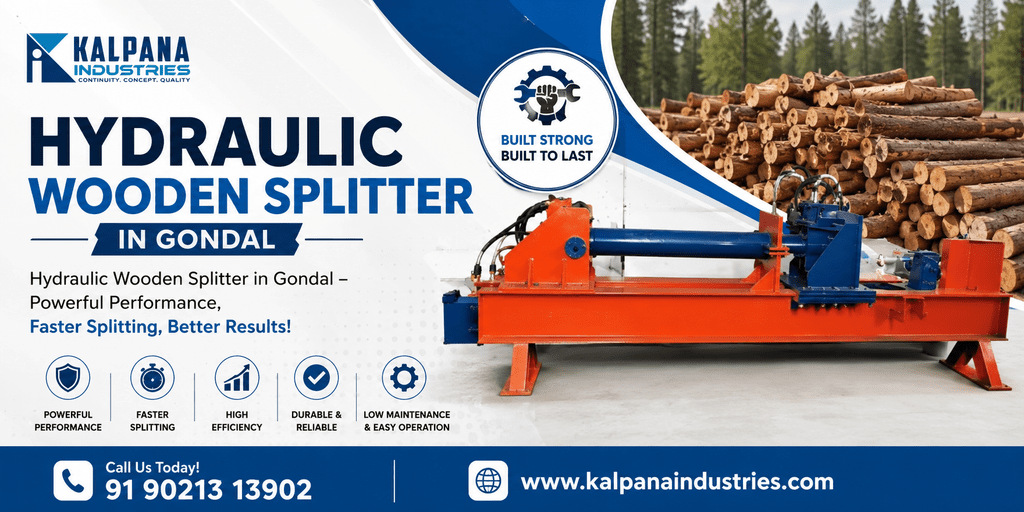
Wood processing is an important part of many industries, farms, workshops, and commercial operations. Splitting large logs manually can take a lot of time and physical effort. A Hydraulic Wooden Splitter in Gondal provides a practical solution for splitting wood quickly, safely, and efficiently. With hydraulic power, these machines can handle different sizes of wooden logs while reducing manual labour.
Kalpana Industries is a trusted name offering reliable industrial and agricultural machinery solutions. The company focuses on providing machines designed for efficient performance, easy operation, and long-term use. For businesses and users looking for a dependable Hydraulic Wooden Splitter in Gondal, Kalpana Industries can be a suitable choice.
What Is a Hydraulic Wooden Splitter
A hydraulic wooden splitter is a machine designed to split logs and wooden blocks into smaller pieces. Unlike traditional manual methods, the machine uses a hydraulic cylinder to generate strong pushing force against the wood.
- Firewood preparation
- Agricultural applications
- Wood processing
- Timber-related work
- Farms and plantations
- Commercial firewood businesses
- Workshops and small industries
The operator places the log in the splitting area and starts the machine. The hydraulic cylinder pushes the log towards a sharp splitting wedge, dividing the wood into smaller sections. This process makes wood preparation faster and reduces the physical effort required from workers.
Why Choose Kalpana Industries
1. Powerful Wood Splitting Performance
- One of the biggest advantages of a hydraulic wood splitter is its powerful splitting action. The hydraulic pump sends pressurised oil into the hydraulic cylinder, which moves the piston and pushes the splitting wedge against the log. This mechanism allows the machine to apply substantial force to the wood. This makes a hydraulic splitter suitable for different types of wood, including thick, dense, and difficult logs. Instead of depending completely on manual force, the machine performs the heavy splitting work efficiently.
2. Saves Time and Increases Productivity
- Manual wood splitting requires considerable time, especially when a business needs to process a large quantity of logs. A hydraulic wood splitter can make the process considerably faster by automating the main splitting operation. For commercial users in Gondal, faster processing means more logs can be handled within the same working period. Higher productivity can be particularly valuable for firewood suppliers, timber businesses, sawmills, and wood-processing units.
3. Reduces Manual Labour
- Splitting heavy logs manually requires physical strength and continuous effort. Workers may also need to repeatedly lift, position, and split logs. A hydraulic wooden splitter reduces the physical workload by allowing the hydraulic mechanism to generate the required splitting force. This can make the operation more convenient and reduce the amount of strenuous manual work involved. Hydraulic splitters are commonly highlighted for reducing labour intensity compared with traditional splitting methods.
4. Suitable for Heavy-Duty Applications
- A major reason to choose a Hydraulic Wooden Splitter in Gondal is its ability to support heavy-duty wood-processing applications. Depending on the machine design and hydraulic capacity, different models can be configured for various log sizes and operating requirements. For businesses that regularly deal with large or hard logs, selecting the appropriate splitting force, cylinder size, stroke length, and hydraulic system is important for achieving reliable performance.
5. Consistent Splitting Results
- Consistency is important when wood needs to be prepared for further processing or used as firewood. Manual splitting can produce pieces of different sizes because the force and splitting position can vary. A hydraulic system provides controlled movement and force, helping users achieve more consistent splitting results. Uniformly split wood can also make handling, storage, transportation, and further processing easier. Hydraulic wood splitters are used for producing more manageable and consistently sized wood pieces.
6. Easy and Convenient Operation
- Hydraulic wood splitters are designed to make wood splitting easier for operators. Once the log is correctly positioned, the hydraulic cylinder performs the main splitting movement. This reduces the need for repeated manual striking and makes the process more convenient for regular production work. Proper operating controls and safety procedures should always be followed while using hydraulic machinery.
7. Handles Different Types of Wood
- Different businesses may work with softwood, hardwood, seasoned wood, or other varieties of logs. A hydraulic splitter can be selected according to the type and size of wood being processed. The required splitting force depends on factors such as log diameter, wood density, knot structure, and moisture condition. Therefore, businesses should select a machine according to their actual production requirements rather than choosing only on the basis of a higher tonnage rating.
8. Improves Workplace Efficiency
- A well-designed wood-splitting machine can improve the overall workflow. Instead of workers spending most of their time manually splitting logs, the machine can handle the primary splitting operation while workers concentrate on loading, sorting, stacking, and other tasks. This can help businesses organise their production process more efficiently and make better use of available manpower.
9. Strong and Durable Construction
- For industrial applications, a hydraulic wooden splitter should have a strong frame and reliable hydraulic components. Heavy-duty construction helps the machine withstand repeated operation and the pressure involved in splitting large logs. The durability of the machine also depends on proper maintenance. Hydraulic oil, hoses, fittings, cylinders, pumps, valves, and other components should be inspected regularly to maintain safe and reliable operation. Hydraulic systems require appropriate fluid maintenance and hose inspection to prevent performance and safety problems.
10. Cost-Effective for Regular Wood Processing
- Although purchasing a hydraulic wooden splitter requires an initial investment, it can provide long-term value for businesses that process wood regularly. Higher productivity, reduced manual effort, and lower dependence on intensive labour can contribute to improved operating efficiency. For commercial users, the important factor is not simply the purchase price but the machine’s productivity, maintenance requirements, operating cost, capacity, and expected service life.
Applications of Hydraulic Wooden Splitters
1. Firewood Production
- One of the most important applications of a Hydraulic Wooden Splitter in Gondal is firewood production. Large logs and wooden rounds can be difficult to split manually, particularly when the wood is hard, thick, or irregular in shape. A hydraulic splitter applies strong and controlled pressure to divide the log into smaller pieces. The resulting pieces can then be collected, stacked, dried, packed, and supplied to customers. Firewood businesses can use the machine to improve production capacity while reducing the amount of physical effort required from workers. Commercial firewood operations commonly use hydraulic splitting equipment because it supports repetitive processing and reduces manual handling.
2. Timber and Wood Processing Industries
- Timber processing units can use hydraulic wooden splitters to handle logs that need to be divided before further processing. Large logs can be reduced into manageable sections, making subsequent handling and processing easier. A splitter can be integrated into a larger wood-processing workflow where logs are cut, split, transported, and stored. This is particularly useful for businesses processing different sizes and types of wood on a regular basis.
3. Sawmill Applications
- Sawmills generate different types of wood waste, offcuts, branches, and logs during timber processing. A Hydraulic Wooden Splitter in Gondal can help process suitable wooden material into smaller pieces. Instead of allowing usable wood residues to become waste, businesses can process them for firewood, biomass fuel, or other applications. Splitting also makes larger pieces easier to move, stack, and transport.
4. Forestry Operations
- Forestry operations frequently involve handling tree trunks, branches, and residual wood after cutting and clearing activities. Hydraulic splitters can be used at or near forestry sites to process logs into smaller pieces. This can reduce the need to transport very large and heavy logs over long distances. Some hydraulic wood-processing equipment is specifically designed for outdoor forestry and agricultural use, including tractor- and machine-mounted configurations.
5. Agricultural Applications
- Farmers and agricultural businesses often deal with tree branches, trunks, orchard waste, and other wooden materials. A hydraulic splitter can help convert this material into smaller pieces that are easier to handle. For farms with regular pruning or tree-clearing activities, the machine can become part of the waste-management process. Suitable wood can be converted into firewood or biomass feedstock instead of being left in large, difficult-to-manage piles.
6. Biomass Fuel Preparation
- The demand for biomass-based fuel has created a need for efficient methods of preparing wood and other plant-based materials. A hydraulic wood splitter can be used as an initial processing machine for suitable logs and wooden material. By breaking large logs into smaller pieces, the material becomes easier to handle and can be prepared for subsequent processing operations. Wood splitters are used in biomass-related workflows where consistent and efficient wood preparation is required.
7. Wood Waste Recycling
- Construction sites, landscaping projects, farms, and timber businesses can generate significant quantities of wooden waste. Large pieces of waste wood are often difficult to store and transport. A hydraulic splitter can help reduce the size of appropriate wooden waste, making it easier to collect and manage. Depending on the type and condition of the wood, processed material may be used for firewood, biomass applications, or other recycling purposes.
8. Timber Yards and Log Storage Areas
- Timber yards regularly receive logs in different sizes and shapes. Handling oversized logs manually can take considerable time and effort. A hydraulic splitter provides a practical way to process selected logs directly within the yard. The machine can help workers convert large logs into manageable sections, making storage, movement, and further processing easier.
9. Rural and Farmhouse Firewood Processing
- Hydraulic wooden splitters are not limited to large industrial plants. They can also be useful for rural properties, farms, farmhouses, and businesses that regularly require firewood. Instead of repeatedly using axes or other manual tools, operators can use hydraulic pressure to split prepared logs. This can be particularly useful when dealing with thick or hard wood that requires considerable physical effort to split manually.
10. Landscaping and Tree-Clearing Work
- Landscaping companies and tree-removal contractors often have to deal with branches, trunks, and sections of trees after pruning or clearing work. Hydraulic splitting equipment can help process larger wooden sections into smaller pieces. This allows companies to manage wood residues more efficiently and potentially convert suitable material into useful products such as firewood or biomass feedstock.
Important Features to Consider
Before purchasing a hydraulic wooden splitter, it is important to select a machine according to your specific application.
Some important factors include:
Hydraulic Power:
The hydraulic system should provide sufficient force for the type and size of wood being processed.
Log Capacity:
Choose a splitter according to the maximum log diameter and length you normally handle.
Machine Construction:
Strong and durable construction is important for continuous industrial or commercial use.
Operating System:
Simple controls can make the machine easier and more convenient to operate.
Maintenance Requirements:
A machine with accessible components and straightforward maintenance can help reduce downtime.
Safety Features:
Proper guarding, stable construction, and safe operating controls are important when working with hydraulic machinery.
Benefits of Hydraulic Wood Splitting
1. High Splitting Power
- One of the biggest advantages of a hydraulic wood splitter is its powerful splitting force. The hydraulic pump sends pressurised fluid to the hydraulic cylinder, which moves the piston and pushes the splitting wedge through the log. This controlled force allows the machine to handle different types of wood, including hard, thick, and difficult logs. This makes hydraulic technology particularly useful when manual tools are unable to split large or dense pieces efficiently.
2. Faster Wood Processing
- Manual wood splitting requires repeated cutting and swinging movements, which takes considerable time. A hydraulic splitter automates the main splitting operation and allows operators to process logs much more quickly. For commercial users, faster processing can mean more wood handled during the working day. Increased productivity is especially valuable for businesses that regularly process large quantities of firewood or timber.
3. Reduces Physical Effort
- Splitting wood manually can require significant physical strength. Workers have to repeatedly lift, position, and strike logs with heavy tools. Over long working periods, this can cause fatigue and reduce productivity. A Hydraulic Wooden Splitter in Gondal takes most of the physical effort out of the splitting process. The hydraulic cylinder provides the required force, while the operator mainly controls the machine and positions the logs. This can make regular wood-processing work considerably easier.
4. Consistent Splitting
- Another important benefit is consistency. Manual splitting can produce pieces of different sizes depending on the operator’s technique and the characteristics of the log. Hydraulic machines provide a more controlled splitting action. This is useful when businesses require relatively uniform wood pieces for firewood, biomass preparation, or further processing. Controlled splitting can also make the finished material easier to stack, transport, and handle.
5. Suitable for Different Types of Wood
- Wood varies considerably in size, density, moisture content, and grain structure. A properly selected hydraulic splitter can provide sufficient force for a wide range of logs. Depending on the machine’s design and capacity, it can be used for smaller logs as well as larger and tougher pieces. The required machine capacity should always be selected according to log diameter, length, wood type, production requirements, and operating conditions.
6. Saves Time and Labour Costs
- Because hydraulic machines automate the difficult part of wood splitting, businesses can reduce the amount of manual effort required for each log. Faster processing can also help workers focus on other important tasks such as feeding, sorting, stacking, packaging, or transportation. Over time, improved productivity and reduced dependence on intensive manual splitting can contribute to better operating efficiency.
7. Better Working Convenience
- A hydraulic wooden splitter provides a more convenient method of processing wood compared with repeatedly using an axe or similar manual equipment. The operator can control the hydraulic movement through the machine’s control system while the hydraulic cylinder performs the splitting action. This makes the machine particularly useful for applications where wood needs to be processed regularly rather than occasionally.
8. Controlled Hydraulic Operation
- Hydraulic systems provide controlled movement and force. A typical splitter uses components such as a hydraulic pump, cylinder, control valve, reservoir, and pressure-relief system. The pump supplies hydraulic fluid, while the control valve directs the fluid to move the cylinder. This controlled operation allows the splitting force to be applied steadily rather than relying on the impact of a manual tool.
9. Reduced Operator Fatigue
- When workers manually split wood for several hours, physical fatigue can become a major issue. Fatigue may affect productivity and concentration. With a hydraulic splitter, the operator does not need to repeatedly swing a heavy axe or maul. This can significantly reduce the physical workload associated with traditional wood splitting.
Conclusion
A Hydraulic Wooden Splitter in Gondal is a useful solution for farmers, wood processors, workshops, timber businesses, and commercial firewood operators looking to improve their wood-splitting process. By using hydraulic force, the machine can reduce manual effort, save time, and improve overall productivity.
If you are planning to purchase a Hydraulic Wooden Splitter in Gondal, consider factors such as hydraulic capacity, log size, construction quality, operating requirements, maintenance, and safety before making your decision. With the right machine from a dependable manufacturer like Kalpana Industries, wood-splitting operations can become significantly more productive and convenient.