
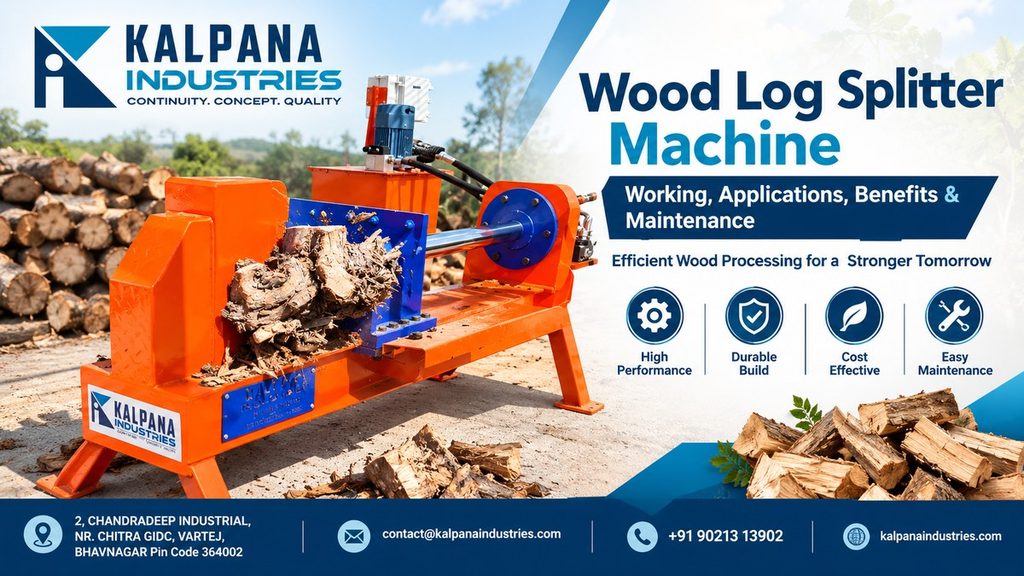
Wood processing requires reliable equipment that can split logs efficiently and consistently. A Wood Log Splitter Machine helps convert wooden logs into smaller pieces for applications such as firewood preparation, biomass processing, and commercial wood processing. Compared with manual splitting methods, a suitable mechanical or hydraulic system can reduce physical effort and improve workflow.
For businesses looking for dependable wood-processing equipment, understanding how a log splitter works, where it is used, and how to maintain it is essential.
What Is a Wood Log Splitter Machine?
A Wood Log Splitter Machine is equipment designed to split wooden logs into smaller sections using mechanical force. Depending on the machine design, this force may be generated by a hydraulic cylinder, a mechanical drive, or another engineered splitting mechanism.
A Hydraulic Wood Splitter Machine uses pressurized hydraulic fluid to move a cylinder and push a log against a splitting wedge. The force applied by the wedge separates the wood along its natural grain or through its internal structure.
The appropriate machine depends on log diameter, wood species, moisture content, splitting requirements, operating frequency, and the desired production capacity.
How Does a Hydraulic Wood Log Splitter Machine Work?
A hydraulic log splitter operates through a coordinated system of components that generate and transfer force to the wooden log.
1. Log Placement
The operator positions the wooden log securely on the machine’s designated support or splitting bed. Proper positioning helps maintain stability during the splitting process.
2. Hydraulic Power Generation
A hydraulic pump supplies pressurized fluid to the system. Depending on the machine design, the pump may be driven by an electric motor or another suitable power source.
3. Cylinder Movement
The pressurized hydraulic fluid moves the cylinder piston. This movement produces the force required to push the log towards the splitting wedge.
4. Wood Splitting
The wedge applies concentrated force to the log, separating it into smaller sections. Splitting performance depends on the machine’s rated force, wedge design, log dimensions, and wood characteristics.
5. Return and Reset
After splitting, the cylinder returns to its starting position according to the machine’s operating cycle. The operator can then prepare the next log in accordance with the manufacturer’s instructions.
Applications of a Wood Log Splitting Machine
A Wood Log Splitting Machine can support different industries and wood-processing operations.
Firewood Preparation
Firewood producers use log splitters to prepare wooden logs into smaller pieces suitable for storage, handling, and use in compatible heating systems.
Biomass Processing
Wood-processing businesses may use log splitters as part of a larger workflow that prepares wood for further size reduction and biomass processing.
Commercial Wood Processing
Commercial facilities can integrate suitable log-splitting equipment into their wood-handling operations to improve consistency and reduce dependence on manual splitting.
Forestry and Timber Operations
Depending on portability, power requirements, and machine specifications, log splitters may support selected forestry, timber-handling, and wood preparation tasks.
Industrial Wood Handling
Businesses processing large quantities of timber may use hydraulic splitting equipment as one stage in a wider production process.
Key Benefits of a Hydraulic Wood Splitter Machine
Choosing a suitable Hydraulic Wood Splitter Machine can offer several operational advantages.
Reduced Manual Effort
Hydraulic power performs the splitting work, reducing the physical effort associated with splitting logs manually.
Consistent Splitting Performance
A properly selected machine can deliver repeatable splitting performance when processing logs within its rated operating limits.
Improved Workflow
Mechanical splitting can help streamline wood preparation, especially where logs must be processed regularly.
Suitable for Different Wood Sizes
Different machine configurations accommodate different log dimensions and operating requirements. Buyers should confirm the maximum supported log length and diameter before purchasing.
Potential Productivity Improvements
For businesses handling regular volumes of wood, an appropriately rated machine may help improve processing efficiency. Actual output depends on the wood, operator, machine cycle, and working conditions.
How to Choose the Right Wooden Log Splitter Machine
Before investing in a Wooden Log Splitter Machine, consider the following factors.
1. Log dimensions: Check the maximum log length and diameter supported by the machine.
2. Splitting force: Select an appropriate rated force for the wood species, log size, and splitting conditions.
3. Power source: Confirm whether the machine uses an electric motor, an engine, or another drive arrangement suitable for your facility.
4. Hydraulic system: Review the hydraulic components, operating pressure, cylinder specifications, and maintenance requirements.
5. Production requirements: Consider expected operating hours, daily workload, and the required splitting cycle.
6. Safety features: Check guarding, controls, emergency stopping arrangements where applicable, and the operating instructions supplied with the equipment.
7. Manufacturer support: Discuss specifications, installation requirements, spare parts, and after-sales assistance with the manufacturer before making a decision.
Wood Log Splitter Machine Maintenance Tips
Regular maintenance helps support reliable operation and can reduce avoidable equipment downtime.
Inspect Hydraulic Hoses and Connections
Check hoses, fittings, and connections for visible damage, leakage, or wear. Have damaged components replaced by qualified personnel before operating the machine.
Monitor Hydraulic Fluid
Check fluid levels and condition according to the manufacturer’s maintenance schedule. Use only the specified hydraulic fluid.
Examine the Splitting Wedge
Inspect the wedge for damage, excessive wear, or other conditions that could affect splitting performance. Follow the manufacturer’s instructions for servicing or replacement.
Keep the Machine Clean
Remove accumulated wood debris and keep the operating area clear. Clean equipment according to the manufacturer’s guidance.
Inspect Moving Components
Check accessible moving components, fasteners, and support structures for wear or looseness as specified in the maintenance manual.
Follow Safe Operating Procedures
Never place hands near the splitting wedge or moving cylinder. Stop the machine and isolate its power source before maintenance. Never inspect hydraulic leaks with your hands because pressurized fluid can penetrate the skin. Repairs should be performed by qualified personnel.
Why Choose the Right Wood Log Splitter Manufacturer?
Selecting the right Wood Log Splitter Manufacturer is an important part of purchasing suitable wood-processing equipment. Buyers should evaluate machine specifications, construction quality, operating requirements, maintenance guidance, and the manufacturer’s ability to support the intended application.
Kalpana Industries provides a point of contact for businesses exploring wood-processing machinery. Before choosing a machine, discuss your log dimensions, wood type, required splitting force, expected workload, and available power supply to identify an appropriate configuration.
Businesses searching for a Hydraulic Wood Splitter Manufacturer, Hydraulic Wood Splitter Machine Manufacturer, Hydraulic Wood Log Splitter Manufacturer, Hydraulic Log Splitter Manufacturer, Hydraulic Firewood Splitter Manufacturer, or Wood Splitting Machine Manufacturer should compare specifications and confirm suitability for their intended use.
Frequently Asked Questions
What is a Wood Log Splitter Machine used for?
A Wood Log Splitter Machine is used to divide wooden logs into smaller sections for firewood preparation, wood processing, and selected biomass-related applications.
How does a hydraulic wood splitter work?
A hydraulic pump supplies pressurized fluid to a cylinder. The cylinder moves a splitting wedge or pushes the log against it, generating the force needed to split the wood.
What factors affect log-splitting performance?
Performance depends on splitting force, log dimensions, wood species, moisture content, grain structure, wedge design, and machine condition.
How often should a wood log splitter be serviced?
Follow the manufacturer’s maintenance schedule. Inspection frequency depends on operating hours, working conditions, and the machine’s design.
How do I choose a suitable wood log splitting machine?
Evaluate log size, required splitting force, power source, expected workload, safety features, maintenance needs, and manufacturer support before purchasing.
Contact Kalpana Industries
Looking for information about a Wood Log Splitter Machine or hydraulic wood-processing equipment? Contact Kalpana Industries to discuss your application and equipment requirements.
Company: Kalpana Industries
Address: 2, Chandradeep Industrial, Near Chitra GIDC, Vartej, Bhavnagar, Gujarat – 364002, India
Phone: +91 90213 13902
Email: contact@kalpanaindustries.com
Website: https://kalpanaindustries.com/
Contact the team to discuss your requirements and identify a suitable wood-splitting solution.