
Best Hydraulic Wood Log Splitter Machine Manufacturer in India
The demand for efficient wood processing equipment is increasing across industries involved in firewood production, timber processing, furniture manufacturing, and commercial wood supply. Businesses handling large quantities of wooden logs require reliable machinery that can reduce manual effort, improve productivity, and deliver consistent splitting results. A Hydraulic Wood Log Splitter Machine Manufacturer in India plays an important role in providing advanced equipment for these requirements. Kalpana Industries offers industrial wood processing solutions designed to support efficient and convenient wood splitting operations. Whether you operate a firewood processing unit, timber business, or commercial wood supply company, choosing the right hydraulic wood splitter machine can help improve your overall production process. What Is a Hydraulic Wood Log Splitter Machine? A Hydraulic Wood Log Splitter Machine is an industrial machine that uses hydraulic pressure to split wooden logs into smaller pieces. It operates through a hydraulic cylinder that pushes a splitting blade or wedge against the wooden log. Compared to traditional manual wood splitting methods, a hydraulic system provides controlled force and makes the splitting process more efficient. A heavy duty wood log splitter machine is particularly useful for businesses that regularly process thick, large-diameter, or hard wooden logs. Why Choose a Hydraulic Wood Splitter Machine? Choosing a hydraulic wood splitter machine offers several operational advantages: A 40 Ton Hydraulic Wood Splitter can be considered for applications requiring substantial splitting force, depending on the machine specifications and log characteristics. Types of Hydraulic Wood Log Splitter Machines Different businesses require different types of wood splitting equipment. Some commonly used configurations include: 1. Heavy Duty Hydraulic Wood Log Splitter A Heavy Duty Hydraulic Log Splitter is suitable for demanding wood processing applications. It is designed for handling larger wooden logs and regular industrial operations. 2. 40 Ton Hydraulic Wood Splitter A 40 Ton Hydraulic Wood Splitter is designed for applications requiring high splitting force. It can be useful for processing thick and difficult-to-split wooden logs. 3. Diesel Engine Hydraulic Wood Splitter A Hydraulic Wood Splitter with Diesel Engine can be considered for locations where a reliable three-phase electricity supply is unavailable. Its suitability depends on engine capacity and hydraulic system specifications. 4. Three Phase Hydraulic Wood Splitter A Three Phase Hydraulic Wood Splitter operates using a three-phase electrical power supply. It is suitable for industrial facilities with an appropriate electrical connection. 5. Fixed and Movable Hydraulic Wood Splitter Fixed hydraulic wood splitters are generally installed at a designated working location, while movable configurations can provide greater flexibility when processing wood at different locations. Industrial Applications of Hydraulic Wood Splitting Machines A Hydraulic Firewood Splitter Machine can be used across several commercial and industrial sectors. Major applications include: A commercial wood splitting machine helps businesses streamline their wood preparation process and handle larger quantities of wooden logs. Important Factors to Consider Before Buying a Wood Log Splitter Machine Before purchasing an Industrial Wood Log Splitting Machine, businesses should evaluate the following factors: 1. Splitting Capacity: Select the required tonnage according to the diameter, length, and hardness of the wooden logs. 2. Hydraulic Cylinder: Check cylinder specifications, operating pressure, and splitting force. 3. Power Source: Choose between an electric motor or diesel engine configuration according to your working environment. 4. Machine Configuration: Consider whether a fixed or movable hydraulic wood splitter is more suitable. 5. Production Requirements: Evaluate the expected daily wood processing volume. 6. Manufacturer Support: Choose a manufacturer that can provide accurate technical specifications and suitable product guidance. Why Choose Kalpana Industries? Kalpana Industries is an industrial equipment manufacturer based in Bhavnagar, Gujarat, India. The company provides industrial machinery solutions, including hydraulic wood log splitter machines, designed for wood processing requirements. When selecting a Wooden Log Splitting Machine Manufacturer in India, buyers should focus on machine specifications, construction quality, hydraulic performance, and suitability for their intended applications. Kalpana Industries aims to help businesses identify suitable wood processing equipment according to their operational requirements. For product specifications, machine configurations, and purchase enquiries, contact Kalpana Industries directly. Frequently Asked Questions (FAQs) 1. What is a hydraulic wood log splitter machine used for? It is used to split wooden logs into smaller pieces using hydraulic pressure. It is commonly used in commercial firewood production and wood processing industries. 2. What is a 40 Ton Hydraulic Wood Splitter? A 40 Ton Hydraulic Wood Splitter is a machine designed to provide a specified splitting force of approximately 40 tons for processing suitable wooden logs. 3. Which is better: diesel or three-phase hydraulic wood splitter? A diesel-powered machine may be suitable for locations without a suitable electrical connection, whereas a three-phase machine is useful in industrial facilities with three-phase electricity. 4. Can a hydraulic wood splitter handle large-diameter logs? Yes, depending on its splitting force, cylinder capacity, machine design, and the size and hardness of the logs. 5. How do I choose the right industrial wood log splitting machine? Consider log diameter, wood type, required splitting force, production capacity, power source, and machine configuration before purchasing. 6. Where can I find a hydraulic wood log splitter machine manufacturer in India? You can contact Kalpana Industries, based in Bhavnagar, Gujarat, for product information and enquiries regarding hydraulic wood log splitter machines. Contact Kalpana Industries for Hydraulic Wood Log Splitter Machines Looking for a reliable wood processing equipment manufacturer in India? Explore the hydraulic wood log splitter machine range from Kalpana Industries and enquire about suitable machine specifications for your business. Website: https://kalpanaindustries.com/ Product Page: https://kalpanaindustries.com/hydraulic-wood-log-splitter-machine/ Email: contact@kalpanaindustries.com Phone: +91 90213 13902 Address: 2, Chandradeep Industrial, Near Chitra GIDC, Vartej, Bhavnagar, Gujarat – 364002, India. Contact Kalpana Industries today to discuss your wood splitting machine requirements.
Wood Log Splitter Machine: Working, Applications, Benefits & Maintenance
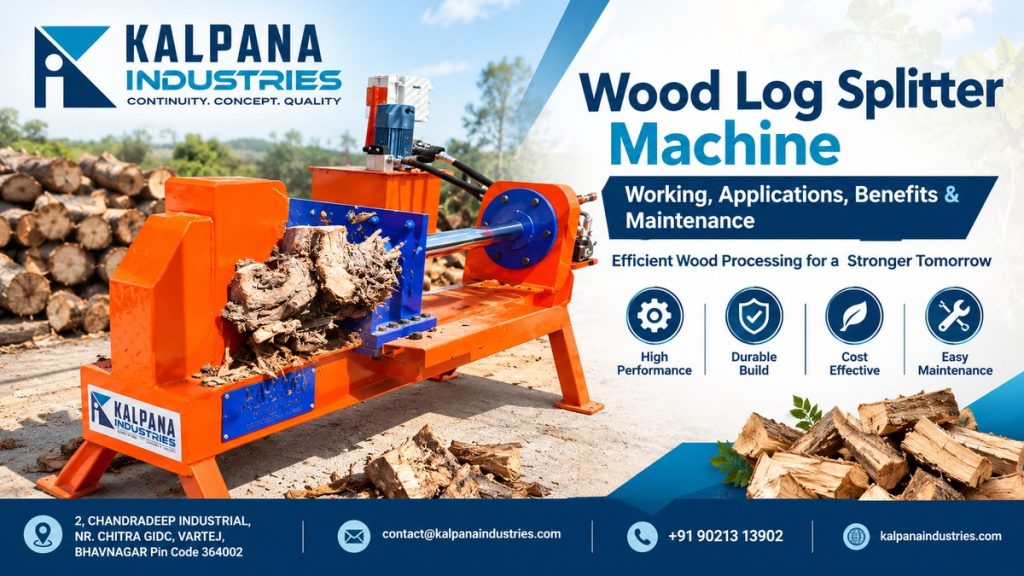
Wood processing requires reliable equipment that can split logs efficiently and consistently. A Wood Log Splitter Machine helps convert wooden logs into smaller pieces for applications such as firewood preparation, biomass processing, and commercial wood processing. Compared with manual splitting methods, a suitable mechanical or hydraulic system can reduce physical effort and improve workflow. For businesses looking for dependable wood-processing equipment, understanding how a log splitter works, where it is used, and how to maintain it is essential. What Is a Wood Log Splitter Machine? A Wood Log Splitter Machine is equipment designed to split wooden logs into smaller sections using mechanical force. Depending on the machine design, this force may be generated by a hydraulic cylinder, a mechanical drive, or another engineered splitting mechanism. A Hydraulic Wood Splitter Machine uses pressurized hydraulic fluid to move a cylinder and push a log against a splitting wedge. The force applied by the wedge separates the wood along its natural grain or through its internal structure. The appropriate machine depends on log diameter, wood species, moisture content, splitting requirements, operating frequency, and the desired production capacity. How Does a Hydraulic Wood Log Splitter Machine Work? A hydraulic log splitter operates through a coordinated system of components that generate and transfer force to the wooden log. 1. Log Placement The operator positions the wooden log securely on the machine’s designated support or splitting bed. Proper positioning helps maintain stability during the splitting process. 2. Hydraulic Power Generation A hydraulic pump supplies pressurized fluid to the system. Depending on the machine design, the pump may be driven by an electric motor or another suitable power source. 3. Cylinder Movement The pressurized hydraulic fluid moves the cylinder piston. This movement produces the force required to push the log towards the splitting wedge. 4. Wood Splitting The wedge applies concentrated force to the log, separating it into smaller sections. Splitting performance depends on the machine’s rated force, wedge design, log dimensions, and wood characteristics. 5. Return and Reset After splitting, the cylinder returns to its starting position according to the machine’s operating cycle. The operator can then prepare the next log in accordance with the manufacturer’s instructions. Applications of a Wood Log Splitting Machine A Wood Log Splitting Machine can support different industries and wood-processing operations. Firewood Preparation Firewood producers use log splitters to prepare wooden logs into smaller pieces suitable for storage, handling, and use in compatible heating systems. Biomass Processing Wood-processing businesses may use log splitters as part of a larger workflow that prepares wood for further size reduction and biomass processing. Commercial Wood Processing Commercial facilities can integrate suitable log-splitting equipment into their wood-handling operations to improve consistency and reduce dependence on manual splitting. Forestry and Timber Operations Depending on portability, power requirements, and machine specifications, log splitters may support selected forestry, timber-handling, and wood preparation tasks. Industrial Wood Handling Businesses processing large quantities of timber may use hydraulic splitting equipment as one stage in a wider production process. Key Benefits of a Hydraulic Wood Splitter Machine Choosing a suitable Hydraulic Wood Splitter Machine can offer several operational advantages. Reduced Manual Effort Hydraulic power performs the splitting work, reducing the physical effort associated with splitting logs manually. Consistent Splitting Performance A properly selected machine can deliver repeatable splitting performance when processing logs within its rated operating limits. Improved Workflow Mechanical splitting can help streamline wood preparation, especially where logs must be processed regularly. Suitable for Different Wood Sizes Different machine configurations accommodate different log dimensions and operating requirements. Buyers should confirm the maximum supported log length and diameter before purchasing. Potential Productivity Improvements For businesses handling regular volumes of wood, an appropriately rated machine may help improve processing efficiency. Actual output depends on the wood, operator, machine cycle, and working conditions. How to Choose the Right Wooden Log Splitter Machine Before investing in a Wooden Log Splitter Machine, consider the following factors. 1. Log dimensions: Check the maximum log length and diameter supported by the machine. 2. Splitting force: Select an appropriate rated force for the wood species, log size, and splitting conditions. 3. Power source: Confirm whether the machine uses an electric motor, an engine, or another drive arrangement suitable for your facility. 4. Hydraulic system: Review the hydraulic components, operating pressure, cylinder specifications, and maintenance requirements. 5. Production requirements: Consider expected operating hours, daily workload, and the required splitting cycle. 6. Safety features: Check guarding, controls, emergency stopping arrangements where applicable, and the operating instructions supplied with the equipment. 7. Manufacturer support: Discuss specifications, installation requirements, spare parts, and after-sales assistance with the manufacturer before making a decision. Wood Log Splitter Machine Maintenance Tips Regular maintenance helps support reliable operation and can reduce avoidable equipment downtime. Inspect Hydraulic Hoses and Connections Check hoses, fittings, and connections for visible damage, leakage, or wear. Have damaged components replaced by qualified personnel before operating the machine. Monitor Hydraulic Fluid Check fluid levels and condition according to the manufacturer’s maintenance schedule. Use only the specified hydraulic fluid. Examine the Splitting Wedge Inspect the wedge for damage, excessive wear, or other conditions that could affect splitting performance. Follow the manufacturer’s instructions for servicing or replacement. Keep the Machine Clean Remove accumulated wood debris and keep the operating area clear. Clean equipment according to the manufacturer’s guidance. Inspect Moving Components Check accessible moving components, fasteners, and support structures for wear or looseness as specified in the maintenance manual. Follow Safe Operating Procedures Never place hands near the splitting wedge or moving cylinder. Stop the machine and isolate its power source before maintenance. Never inspect hydraulic leaks with your hands because pressurized fluid can penetrate the skin. Repairs should be performed by qualified personnel. Why Choose the Right Wood Log Splitter Manufacturer? Selecting the right Wood Log Splitter Manufacturer is an important part of purchasing suitable wood-processing equipment. Buyers should evaluate machine specifications, construction quality, operating requirements, maintenance guidance, and the manufacturer’s ability to support the intended application. Kalpana Industries provides a point of contact for businesses
Hydraulic Wood Splitter vs Manual Wood Splitting: Which Is Better?
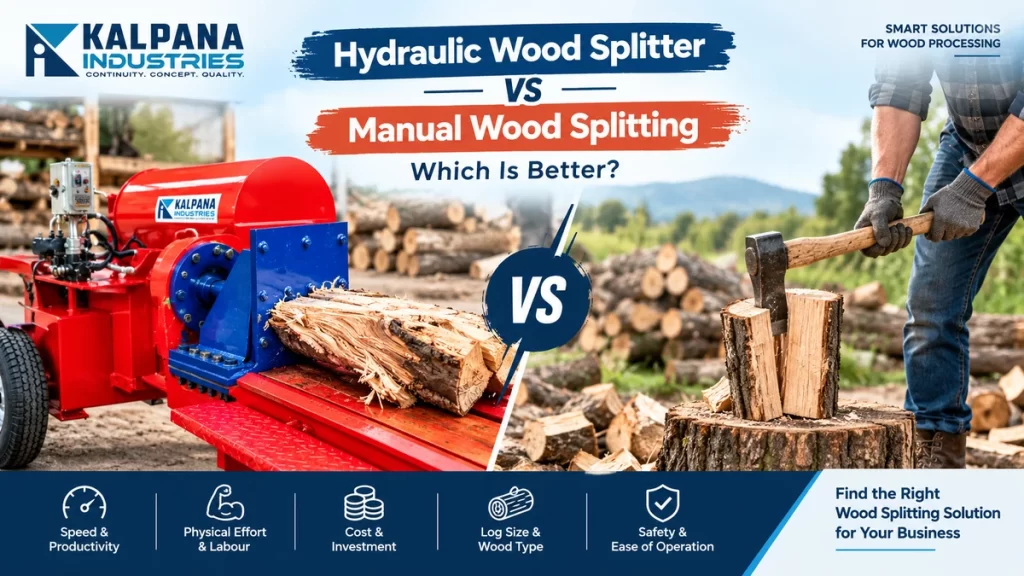
Splitting wooden logs is an essential task in firewood production, timber processing, forestry and other wood-based industries. Traditionally, workers use axes, wedges and hammers to split logs manually. However, manual wood splitting can require considerable physical effort and time, particularly when handling large or hard logs. A hydraulic wood splitter offers a more efficient alternative by using hydraulic force to split logs with less physical effort. But is a hydraulic machine always better than manual wood splitting? The answer depends on your workload, production requirements, available budget and operating conditions. In this guide, we compare hydraulic and manual wood splitting to help you choose the right solution for your needs. What Is a Hydraulic Wood Splitter? A hydraulic wood splitter is a machine that uses hydraulic pressure to push a wooden log against a splitting wedge. This controlled force helps divide logs into smaller pieces for firewood preparation and other wood-processing applications. A modern hydraulic wood splitter machine is particularly useful for businesses that handle large logs or process wood regularly. Depending on the model, machines may offer different splitting capacities, power sources and configurations. Kalpana Industries manufactures hydraulic wood log splitter machines designed for demanding wood-processing requirements. Explore our Hydraulic Wood Log Splitter Machine to learn more about available machine features and options. What Is Manual Wood Splitting? Manual wood splitting involves using tools such as axes, splitting mauls and wedges to divide logs. The operator applies physical force to split the wood into smaller pieces. This method can be practical for occasional household use, small quantities of firewood and situations where purchasing machinery is not economical. However, splitting large volumes manually can become tiring and time-consuming. The effectiveness of manual splitting depends on the operator’s skill, the type of wood, log dimensions and the condition of the tools. Hydraulic Wood Splitter vs Manual Wood Splitting: Key Differences 1. Speed and Productivity Manual splitting may be sufficient when only a few logs need processing. However, productivity can decrease when workers must split a large quantity of wood every day. A hydraulic wood splitter can streamline repetitive splitting operations by applying controlled mechanical force. This can help businesses process more logs in less time, depending on the machine model and working conditions. Winner for regular, high-volume work: Hydraulic wood splitter. 2. Physical Effort and Labour Manual wood splitting requires repeated lifting, swinging and striking. These activities can cause fatigue, especially during long working hours. A hydraulic wood splitting machine reduces the need for repeated manual striking. Operators must still load logs, position material correctly and follow operating procedures, but the machine performs the main splitting action. Winner for reducing physical effort: Hydraulic wood splitter. 3. Initial Cost and Long-Term Value Manual tools generally cost less initially and may be sufficient for occasional use. They do not require a powered hydraulic system. A hydraulic machine requires a larger initial investment, along with suitable power, maintenance and operating arrangements. However, businesses processing substantial quantities of wood should evaluate the potential savings in labour time and improved productivity. The most economical option depends on workload, machine utilisation, energy costs, maintenance and the price of labour. Winner for low initial investment: Manual splitting. 4. Log Size and Wood Type Small logs and suitable wood species can often be split manually. Larger, knotty or dense logs may require greater effort and specialised techniques. A hydraulic wood log splitter can provide greater mechanical force for demanding applications. However, the maximum log length, diameter and splitting capacity depend on the specific model and the type of wood being processed. Always check the manufacturer’s specifications before selecting a machine. 5. Consistency of Work Manual splitting results can vary with operator skill, fatigue and the structure of the wood. A properly selected hydraulic wood splitter can provide a more repeatable process. Actual results still depend on log condition, grain direction, machine capacity and operator technique. For commercial wood processing, consistent operation can help improve workflow and simplify production planning. 6. Safety and Ease of Operation Manual splitting involves sharp tools, swinging movements and the risk of flying wood fragments. Hydraulic machinery introduces different hazards, including crushing points, moving components and high-pressure hydraulic systems. Neither method is risk-free. Use appropriate protective equipment, secure logs correctly, follow the manufacturer’s instructions and never bypass machine guards or safety controls. A hydraulic machine should only be operated by trained personnel. Hydraulic Wood Splitter vs Manual Splitting: Comparison Table Factor Hydraulic Wood Splitter Manual Wood Splitting Initial investment Higher Lower Physical effort Generally lower Generally higher Bulk processing Better suited More labour-intensive Power requirement Depends on model No powered machine required Maintenance Hydraulic and mechanical maintenance Tool inspection and sharpening Large-log handling Depends on rated capacity Can be difficult Best use Regular commercial operations Occasional, small-scale use Why Choose a Hydraulic Wood Splitter Machine? For businesses that regularly process wooden logs, a hydraulic machine can offer several operational advantages. Kalpana Industries offers hydraulic wood log splitter machines with model-specific configurations. Review the machine specifications and available options before making a purchasing decision. How to Choose the Right Wood Splitting Machine Before buying a wood splitting machine, consider the following factors: Choosing equipment based on your actual workload helps you avoid investing in a machine that is either unsuitable or unnecessarily large for your requirements. Why Consider Kalpana Industries? Kalpana Industries manufactures industrial equipment, including hydraulic wood log splitter machines. The available machine range includes fixed and movable configurations and selected electric motor or diesel engine options. Businesses evaluating a hydraulic wood splitter should compare the available specifications with their log dimensions, expected workload and working conditions. Visit our Hydraulic Wood Log Splitter Machine product page to review product details and contact our team about your requirements. Frequently Asked Questions Is a hydraulic wood splitter better than manual wood splitting? A hydraulic wood splitter is generally more suitable for frequent, high-volume wood processing because it reduces physical effort and can improve productivity. Manual splitting may be more economical for occasional, small-scale tasks. Can a
How to Choose the Right Hydraulic Wood Log Splitter for Your Business
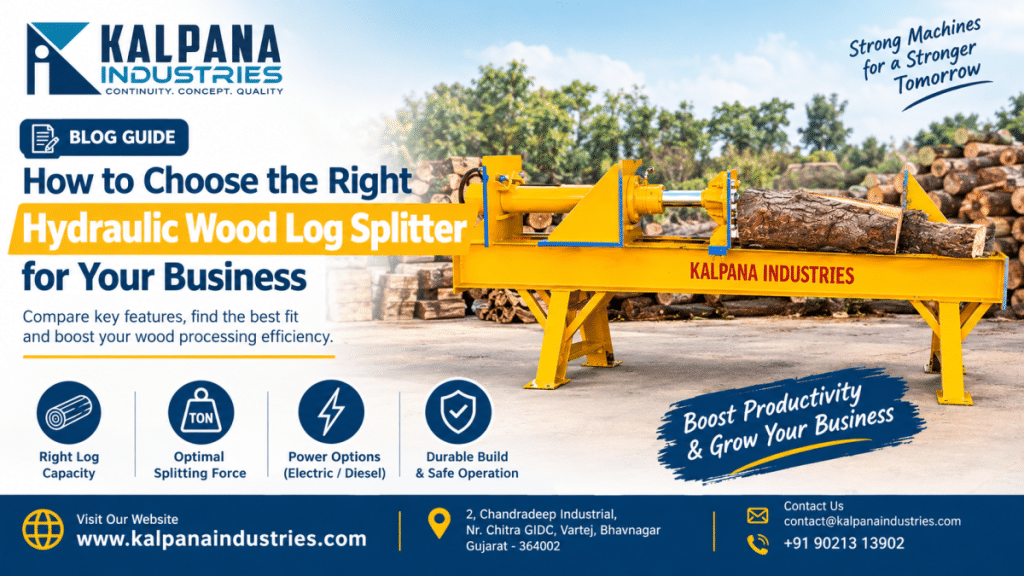
Choosing the right Hydraulic Wood Log Splitter is an important decision for businesses involved in firewood production, timber processing, forestry, and commercial wood supply. The right machine can help improve productivity, reduce manual effort, and maintain a consistent wood-splitting process. However, different businesses have different requirements. Log dimensions, splitting force, power supply, machine construction, and daily production targets all influence the best choice. In this guide, we explain how to select a suitable hydraulic wood log splitter for your business and what to consider before making an investment. What Is a Hydraulic Wood Log Splitter? A hydraulic wood log splitter is a machine that uses hydraulic pressure to push a wooden log against a splitting wedge. This force divides the log into smaller pieces for further processing or use. Compared with traditional manual splitting methods, hydraulic machines can reduce physical effort and support more consistent production. Businesses looking for a reliable Hydraulic Log Splitter Manufacturer should evaluate the machine’s performance, construction quality, operating requirements, and suitability for their intended application. 1. Understand Your Business Requirements Before selecting a machine, identify the type and volume of wood you process regularly. For example, firewood suppliers may need a machine that handles repeated splitting operations throughout the working day. Timber-processing units may prioritise larger log capacity, while smaller workshops may require a compact and practical solution. Consider these questions before purchasing: Understanding these requirements helps you select a machine that matches your workflow and avoids paying for unnecessary capacity. 2. Check the Log Size and Splitting Capacity Log capacity is one of the most important factors when choosing a hydraulic wood log splitter. The machine must accommodate the length and diameter of the logs you process. A machine with insufficient capacity may not handle your regular workload efficiently. Therefore, compare the manufacturer’s stated limits with the dimensions of your actual logs. For example, the hydraulic wood log splitter offered by Kalpana Industries is designed to handle logs up to 3 feet long and 20 inches in diameter, according to its product information. Always confirm the specifications of the particular model before placing an order. 3. Choose the Right Splitting Force Splitting force determines how much pressure the machine can apply to a log. The required force depends on wood type, log diameter, grain structure, knots, and moisture conditions. A higher splitting force may be useful when processing large or difficult logs. However, selecting a machine based only on tonnage is not recommended. Evaluate splitting force alongside log capacity, hydraulic system performance, and your expected production requirements. Working with an experienced wood log splitter manufacturer can help you identify a suitable configuration for your business. 4. Select the Appropriate Power Source Your available power supply and operating environment should influence your choice of machine. Electric-Powered Hydraulic Wood Log Splitter An electric-powered model can be suitable for workshops and production facilities with a compatible electrical connection. Consider motor requirements, phase availability, installation conditions, and operating hours. Diesel-Powered Hydraulic Wood Log Splitter A diesel-powered model may be appropriate for remote locations or outdoor operations where a suitable electrical supply is unavailable. Before choosing either option, compare operating costs, maintenance requirements, fuel or electricity availability, and the conditions at your worksite. Kalpana Industries offers power options that include a three-phase electric motor and a diesel engine. Confirm the available configuration for your intended application. 5. Compare Fixed and Movable Machine Designs The machine’s configuration affects how easily it fits into your daily operations. A fixed hydraulic wood log splitter may be appropriate for a dedicated production area where logs are brought to the machine. A movable model can provide greater flexibility when splitting work takes place at different locations within a site. Consider your available floor space, log-handling arrangements, transportation needs, and workplace layout before deciding between these options. 6. Evaluate Build Quality and Maintenance A commercial wood-splitting machine should be suitable for the workload and working conditions in which it will operate. When evaluating a machine, check the following components: Regular inspection and preventive maintenance can help reduce unexpected downtime and support reliable operation. 7. Prioritise Operator Safety Safety should be a key consideration when purchasing any industrial wood-splitting machine. Check the availability of appropriate guards, accessible emergency-stop arrangements where applicable, safe operating controls, and clear operating instructions. Operators should receive suitable training and use the required protective equipment. Never place hands near the splitting wedge or moving components during operation. Follow the manufacturer’s instructions for installation, operation, inspection, and maintenance. 8. Calculate the Total Cost of Ownership The purchase price is only one part of the investment. A business should also consider the long-term cost of operating and maintaining the machine. Your evaluation should include: A machine that suits your workload and operates reliably may offer better long-term value than a cheaper option that does not meet your production requirements. Compare machines based on their suitability, operating costs, and expected output rather than price alone. Why Choose Kalpana Industries for a Hydraulic Wood Log Splitter? Kalpana Industries manufactures industrial equipment, including hydraulic wood log splitter machines for wood-processing applications. The company’s product information highlights a 40-ton hydraulic jack capacity, log dimensions of up to 3 feet in length and 20 inches in diameter, fixed and movable configurations, and electric or diesel power options. These features may suit businesses involved in firewood preparation, timber handling, and commercial wood processing, depending on their specific requirements. If you are searching for a dependable wood log splitter manufacturer or Hydraulic Log Splitter Manufacturer, review the available specifications and discuss your operating needs before selecting a machine. Explore the product here: Hydraulic Wood Log Splitter Machine by Kalpana Industries. Conclusion Choosing the right hydraulic wood log splitter requires careful consideration of log capacity, splitting force, power source, machine design, maintenance, and safety. Start by identifying your daily production needs and the dimensions of the wood you process. Then compare available machines against your operating conditions and long-term budget. A suitable machine can help streamline wood processing, reduce manual effort,
How to Choose the Right Hydraulic Wood Log Splitter for Your Business
Choosing the right Hydraulic Wood Log Splitter is an important decision for businesses involved in firewood production, timber processing, forestry, agriculture and commercial wood handling. The right machine can help reduce manual labour, improve productivity and make wood-splitting operations more consistent. However, different businesses handle different types and sizes of logs. Therefore, it is important to consider factors such as splitting force, log capacity, power source, machine construction, operating requirements, maintenance and safety before purchasing a machine. If you are looking for a reliable Hydraulic Wood Log Splitter Manufacturer, understanding these factors can help you select a machine that matches your production requirements. What Is a Hydraulic Wood Log Splitter? A Hydraulic Wood Log Splitter is a machine that uses hydraulic pressure to generate strong splitting force. The hydraulic cylinder pushes a log against a splitting wedge, breaking the log into smaller and more manageable pieces. Compared with traditional manual wood-splitting methods, hydraulic technology can reduce physical effort and improve processing efficiency. This makes hydraulic splitters suitable for commercial and industrial applications where a large quantity of wood needs to be processed regularly. A modern Hydraulic Wood Splitter Machine can be used for firewood preparation, timber processing, forestry operations, agricultural applications and other wood-processing requirements. Why Is Choosing the Right Hydraulic Log Splitter Important? Every business has different wood-processing requirements. A small workshop may need a compact machine, while a commercial firewood operation may require a heavy-duty hydraulic machine with higher splitting force and larger log capacity. Choosing the wrong machine can result in lower productivity, unnecessary operating costs and increased maintenance requirements. The right Hydraulic Log Splitter should provide: 1. Check the Size of the Logs You Process The first factor to consider is the size of the logs you normally process. Before choosing a Hydraulic Wood Log Splitter, measure the average and maximum log length and diameter used in your operation. For example, Kalpana Industries offers hydraulic wood log splitter machines designed for logs up to approximately 3 feet in length and 20 inches in diameter, depending on the machine configuration. If your business regularly processes large or hard logs, choose a machine with sufficient capacity and hydraulic force. Consider These Log Specifications Understanding these requirements will help you select the right Hydraulic Wood Splitter Machine for your business. 2. Consider the Required Splitting Force Splitting force is another important factor when selecting a hydraulic machine. Hardwood, large logs and irregular logs generally require more force than smaller and softer logs. Therefore, businesses handling heavy-duty wood-processing requirements should consider machines with appropriate hydraulic capacity. Kalpana Industries’ existing hydraulic wood log splitter model is listed with a hydraulic jack capacity of up to 40 tons, depending on the model. The required splitting force depends on: A professional Hydraulic Log Splitter Manufacturer can help you select the appropriate machine capacity according to your application. 3. Select the Right Power Source Power requirements are also important when choosing a Hydraulic Wood Log Splitter. Depending on your working environment, you may require an electric motor or diesel engine configuration. Electric-powered machines can be suitable for locations with reliable electricity, while diesel-powered configurations can provide flexibility for operations where electrical infrastructure is limited. Kalpana Industries offers configurations with 3-phase electric motor or diesel engine options for its hydraulic wood log splitter machines. Before selecting the machine, consider: 4. Choose Between Fixed and Movable Models Your working environment should determine whether you need a fixed or movable machine. A fixed Hydraulic Wood Log Splitter can be suitable for a dedicated production area where logs are brought to the machine. A movable model can be more convenient when wood needs to be processed at different locations. For businesses working across farms, timber yards or multiple processing areas, mobility can provide greater operational flexibility. 5. Look for Heavy-Duty Construction Industrial wood processing can place significant stress on machinery. Therefore, machine construction should be considered carefully. A strong frame and durable components can help the machine withstand regular operation. When evaluating a Wood Log Splitter Manufacturer, ask about: A properly constructed Hydraulic Firewood Splitter can provide reliable performance for regular commercial applications. 6. Consider Productivity and Cycle Time For businesses, productivity directly affects operating costs. A machine that can process logs efficiently can help increase daily output while reducing dependence on manual labour. Before purchasing a Hydraulic Wood Log Splitter, consider how many logs you need to process every day. For example: Small operation: Occasional or low-volume wood splitting Medium operation: Regular firewood or timber processing Large operation: Continuous commercial or industrial wood processing Your expected production volume should determine the machine capacity you select. 7. Check Ease of Operation A hydraulic machine should be practical and straightforward to operate. Simple controls can help operators learn the machine more quickly and reduce unnecessary downtime. Important operating considerations include: A user-friendly Hydraulic Wood Splitter Machine can help improve workflow and operator convenience. 8. Safety Should Be a Priority Safety is one of the most important factors when selecting any industrial machine. Wood logs can be heavy and difficult to handle. Hydraulic equipment also generates substantial force. Therefore, the machine should be operated according to the manufacturer’s instructions and appropriate workplace safety procedures. Look for features and design considerations such as: Operators should also receive appropriate training before using a hydraulic log splitter. 9. Consider Maintenance Requirements Regular maintenance helps keep hydraulic machinery operating efficiently. Before purchasing a Hydraulic Log Splitter, understand the maintenance requirements of the machine. Regular checks may include: A machine with accessible components and straightforward maintenance can help reduce unnecessary downtime. 10. Think About Your Long-Term Business Requirements Do not select a machine only according to your current production requirements. If your business is growing, your wood-processing volume may increase in the future. Therefore, consider whether the machine will continue to meet your requirements as production increases. A good investment should provide: This is especially important for commercial firewood producers, timber businesses, forestry operations and wood-processing companies. Applications of Hydraulic Wood Log Splitters A
Hydraulic Wood Log Splitter – Heavy-Duty Wood Splitting Solution
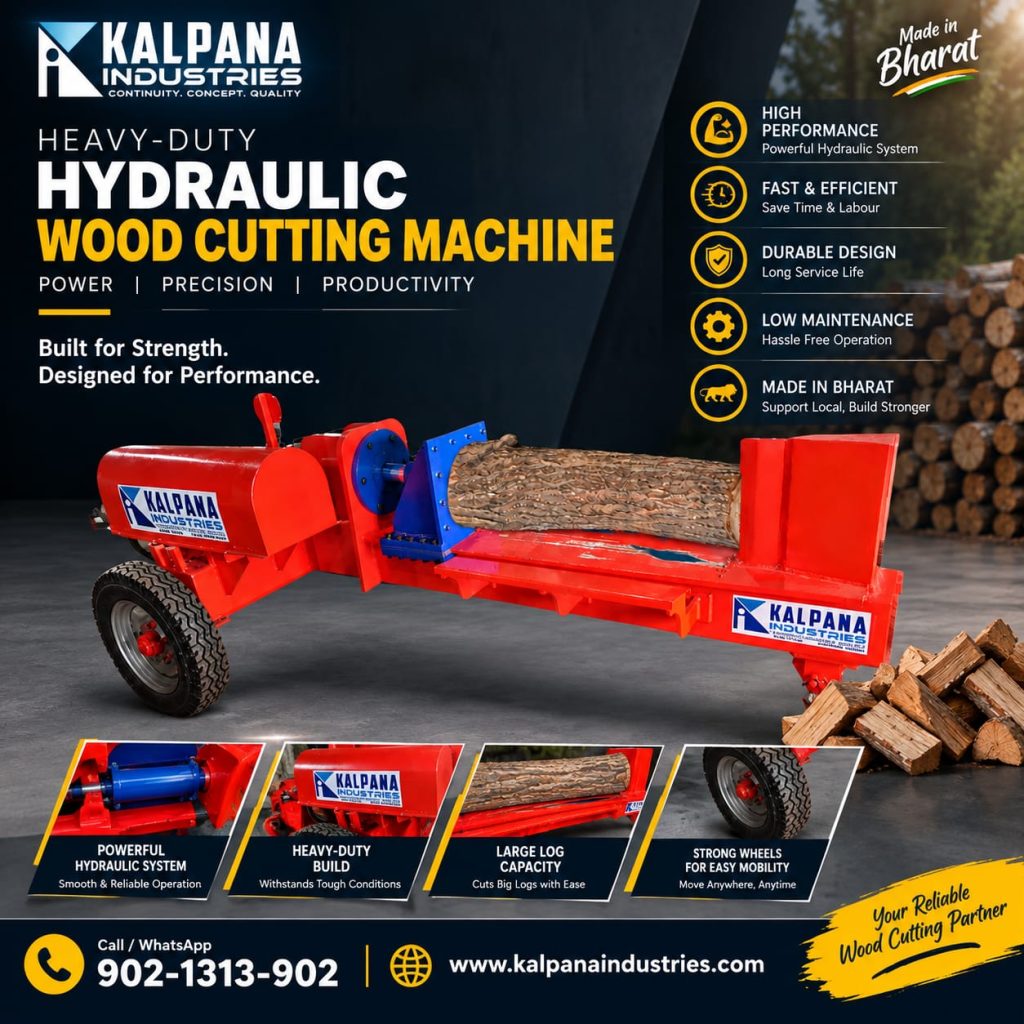
Processing large logs manually can be time-consuming, physically demanding, and inefficient. A hydraulic wood log splitter provides a powerful and reliable solution for splitting large logs with improved productivity and consistent performance. Designed for demanding wood-processing applications, hydraulic technology delivers strong splitting force while reducing manual labor. Hydraulic Wood Log Splitter for Efficient Wood Processing The Hydraulic Wood Log Splitter from Kalpana Industries is designed for users who need strength, precision, and dependable operation. Its heavy-duty construction and hydraulic system make it suitable for handling large logs and demanding working conditions. Whether you are involved in firewood preparation, timber processing, wood cutting, or commercial wood handling, a reliable hydraulic wood splitter machine can help improve your overall workflow. Key Features of Hydraulic Wood Splitter Machine Powerful Hydraulic System The hydraulic mechanism provides strong and consistent force for splitting logs efficiently, helping reduce manual effort and improve productivity. Heavy-Duty Construction Built with a robust structure, the machine is designed to withstand tough working conditions and regular use. Large Log Capacity The machine is designed to handle large logs, making it suitable for applications where conventional manual splitting methods may be slower and more labor-intensive. Easy Mobility Strong wheels make the wood log splitter easier to move around the working area, providing greater flexibility during operation. Low Maintenance A durable design and reliable hydraulic system can help support smooth operation with manageable maintenance requirements. Why Choose a Hydraulic Log Splitter? Using a hydraulic log splitter can help businesses and wood-processing professionals save time and reduce physical labor. Compared with traditional manual log splitting, hydraulic machinery provides controlled force and a more consistent working process. It can be useful for: Choose Kalpana Industries. Kalpana Industries focuses on manufacturing reliable machinery designed around practical industrial requirements. The Hydraulic Wood Log Splitter combines a powerful hydraulic system, heavy-duty construction, large log capacity, and mobility to support efficient wood-processing operations. If you are looking for a dependable hydraulic wood splitter machine for your business or wood-processing requirements, Kalpana Industries can provide a practical solution designed for strength and productivity. Get Your Hydraulic Wood Log Splitter Today Upgrade your wood-processing operation with a powerful and efficient hydraulic wood log splitter from Kalpana Industries. Call / WhatsApp: 902-1313-902Website: www.kalpanaindustries.com Contact Kalpana Industries today to discuss your requirements and get more information about our Hydraulic Wood Splitter Machine.